
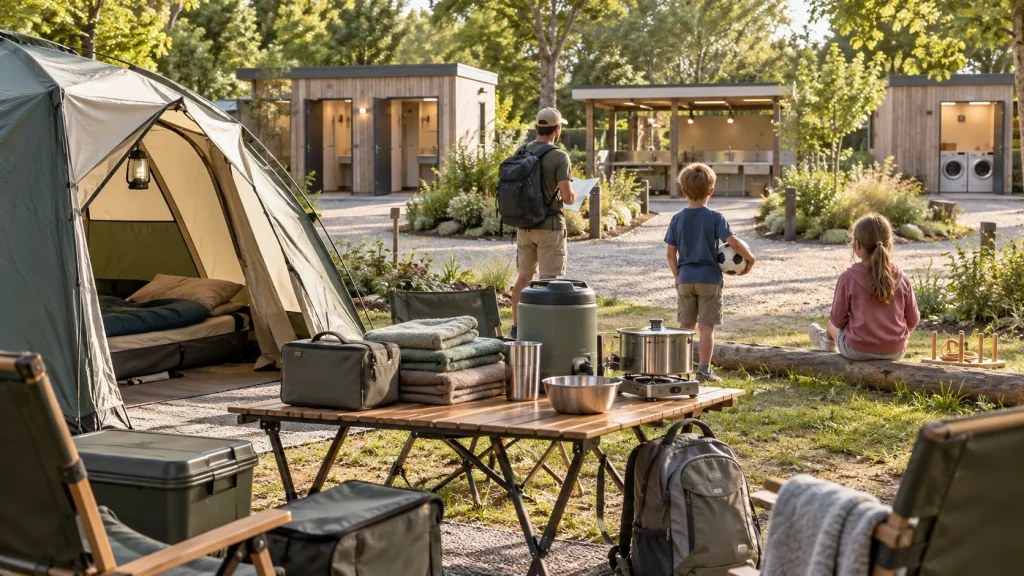
Busy shared facilities can make family camping feel less relaxed, especially when everyone wants a shower or dinner at the same time. A little organisation helps, but a rigid timetable can create its own problems. The aim is to know what your family needs, spread out the tasks that can wait, and keep a simple alternative ready when a queue forms.
Learn the layout before you need it
On arrival, find the toilets, showers, cooking area and laundry facilities. Check how to access them and whether any equipment has instructions or posted opening times. If there is more than one sanitary building, note which is closest to your pitch and which might be useful when the nearest one is busy. Avoid assuming that every building has the same facilities.
The campsite has three sanitary buildings with toilets and showers, including cubicles and separate rooms. Its camping facilities also include a guest kitchen with ovens and a laundry area with washing machines and dryers. Access cards are provided at reception, so it is sensible to sort out access early, particularly if you expect to use the kitchen or laundry that evening.
Show older children the route to the facilities, while making a clear plan for who accompanies younger ones. At night, a familiar route and a ready torch can prevent a simple toilet trip from waking the whole family.
Separate urgent needs from flexible tasks
A child who needs the toilet cannot wait for a carefully planned quiet period. Laundry and most meal preparation usually can. Treat these differently: deal with essential hygiene when needed, then move flexible jobs to a less crowded moment if the facilities are occupied.
Before leaving the pitch for the day, agree on a loose order for the evening. One adult might prepare food while another takes children to wash their hands. Showers can happen later, if that suits your family’s routine. This avoids sending everyone to the same building with towels, toiletries and dinner ingredients at once.
It also helps to set out what each person needs before walking over. A small wash bag, clean clothes and a bag for wet items make a shower visit easier to manage. Keep shoes and a warm layer close for children who may have to wait briefly outside or walk back after washing.
Make shared cooking less time-sensitive
The busiest part of cooking is often the work done before food reaches the oven. Wash and cut ingredients at your pitch where appropriate, check what utensils you have brought, and decide who will carry everything. Use suitable containers so you are not balancing loose food, plates and a hot dish on one trip.
Choose meals that tolerate a short delay. If the oven is occupied, a meal that can wait while the children play is easier to manage than one that depends on a precise serving time. Food that requires careful temperature control still needs to be stored and handled appropriately; flexibility should not mean leaving perishable ingredients sitting out.
For example, imagine returning from an outing with tired children and finding the guest kitchen busy. If dinner ingredients are already prepared, one adult can check when space becomes available while the others settle at the pitch. The useful preparation is not a complicated menu plan. It is removing the small jobs that become difficult when several families share a workspace.
Clean your space and collect your belongings as soon as you finish. Leaving a counter ready for the next family makes the kitchen work better for everyone, including you on your next visit.
Use laundry deliberately on longer stays
Laundry is easier to fit around a holiday when it is treated as an occasional task, not an emergency caused by running out of clean clothes. Pack enough essentials for a reasonable stretch between washes, especially for children who may get wet or muddy. Keep dirty clothes together so you can see when a load is worthwhile.
Before starting, check the machines’ instructions and the time you have available. A wash that finishes just as you leave for an activity may hold up the next guest. Bring what you need to carry clean clothes back promptly, and have a way to dry items that cannot go in a machine dryer. If the laundry area is busy, washing a small non-urgent load later may be simpler than waiting beside the machines.
Wet towels need particular attention. Hanging them where permitted between uses may reduce the amount of damp fabric accumulating in a tent or vehicle. Keep them separate from clean, dry clothes while they are still wet.
Give children a plan for waiting
Queues feel longer to children who do not know what happens next. Explain the immediate plan: “We will check the showers, then play for a while if they are full.” A short, predictable alternative is more useful than promising that the facilities will be free soon.
At the campsite, families have access to activities including a playground, a bouncing pillow, an interactive play area and the beach. These can provide a pleasant break between flexible tasks, though an adult should still supervise children according to their age and the setting. Do not send a child away alone simply to save a place in a queue.
If you are travelling with another adult, divide jobs according to what actually needs doing. One person can supervise children while the other checks a facility or starts dinner. Swap roles later so the same person is not left managing every queue and every child-related task.
For more detailed information on this topic, read our guide on Why Cabin Camping Is Ideal for Families Who Want Extra Comfort.
Keep the plan light
Shared facilities are part of camping, and their busiest periods may change with the weather, season and other guests’ plans. Check the layout, prepare supplies before each visit, and let meals and laundry move when they can. When a facility is full, a calm change of order is often enough to keep the day going.