
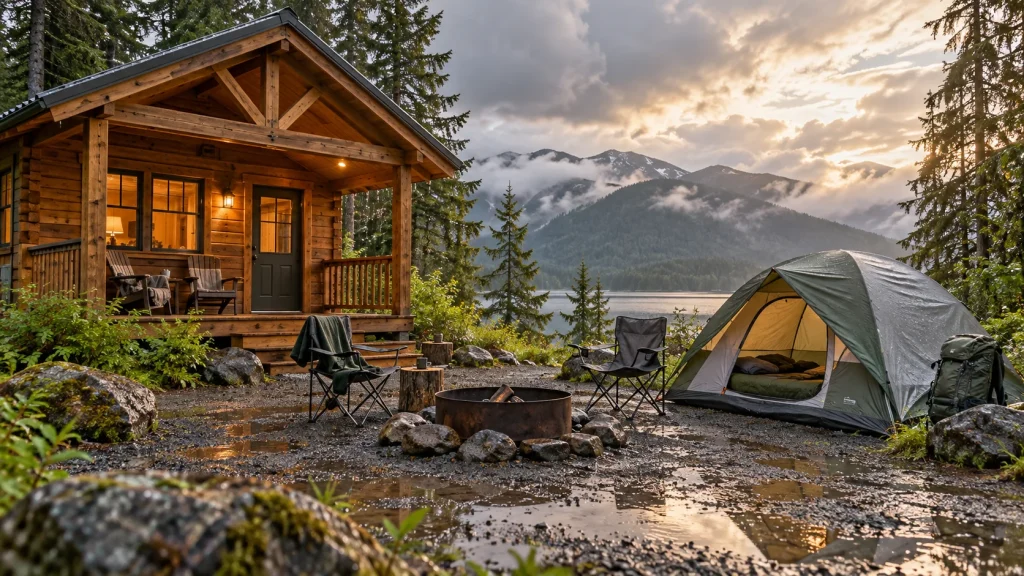
A forecast showing sunshine, showers, and gusty winds can make a simple accommodation choice feel consequential. For cabin or tent camping in unpredictable weather, the main difference is how much of your day depends on keeping your sleeping space dry. A cabin gives you a more reliable place to retreat; a tent can still work well if you have suitable gear, choose your pitch carefully and are comfortable adapting your plans.
Rain changes more than the view
A cabin has a solid roof and walls, so a passing shower is less likely to interrupt sleep, getting dressed or sorting out wet clothes. That matters especially on a longer stay, when damp belongings can accumulate. You may still need waterproof clothing for time outdoors, and cabin facilities vary, but you have an easier place to pause while rain passes.
In a tent, rain becomes a practical task. The flysheet, seams, groundsheet and pitch all affect whether the interior stays dry. Even a sound tent can feel cramped when everyone comes inside at once with wet shoes and jackets. Good ventilation also matters: moisture from breathing and damp gear can collect inside and be mistaken for a leak.
Imagine arriving with two children just as an evening shower starts. With a cabin, you can bring bags indoors and organize dinner without first setting up shelter. With a tent, having the rain cover accessible and knowing how to pitch it quickly makes a considerable difference. The forecast has not changed, but preparation changes how disruptive it feels.
Wind and temperature test different weaknesses
Cabins generally make windy nights more comfortable. They reduce drafts and remove the worry of a tent moving or making noise around you. That can be valuable for light sleepers or families with young children. You still need to check what the cabin provides: bedding, heating, and cooking arrangements should never be assumed from the word cabin alone.
Tent comfort depends heavily on equipment and placement. A well-pitched tent with properly secured lines is better prepared for gusts than one set up loosely in an exposed spot. Temperature also needs attention. A sleeping bag appropriate for the expected conditions and insulation beneath you can matter as much as the tent itself, because the ground can draw heat away overnight.
Warm weather presents the opposite problem. A tent in direct sun may become uncomfortable during the day, while a cabin can also heat up depending on its design and ventilation. Neither option removes the need to think about shade, airflow, and clothing layers. The useful question is whether you can adjust your setup when conditions change.
What happens when the forecast is wrong?
An unsettled forecast does not automatically rule out tent camping. It does, however, raise the value of flexibility. Consider how easily you could handle an extra wet day, a colder night or a windy arrival. If changing plans would be difficult because you are travelling with small children, carrying limited gear or staying several nights, a cabin may offer welcome breathing room.
For a short trip with experienced campers and suitable equipment, a tent may be a reasonable choice. Someone who enjoys being close to the outdoors might accept a more hands-on stay, especially when there are campsite facilities nearby. At the campsite, camping guests have access to sanitary facilities, a guest kitchen, and laundry facilities. Those can help with washing and meals, though they do not replace a dry sleeping area or eliminate the walk across the site in bad weather.
A useful way to compare the options is to think through the least convenient hour of the trip. If heavy rain starts after bedtime, would you be content checking the tent and moving belongings away from the walls? If everyone wakes to wet jackets, where will those jackets go? These questions reveal more about your likely comfort than a forecast icon alone.
Plan for the whole day, not just the night
The sleeping arrangement is only one part of a weather-affected holiday. Rain may change when you cook, where you eat, and how long children are happy to stay outdoors. Cabin accommodation can make indoor breaks easier, but the available space and facilities depend on the particular cabin. Check its description before planning meals or packing lightly.
For tent camping, pack so wet and dry items can stay separate. Keep sleepwear and spare socks in a waterproof bag, and place rainwear where you can reach it without unpacking everything. A small mat or designated spot for muddy shoes helps protect the sleeping area. If your campsite has shared cooking and laundry facilities, learn when and how guests can use them before relying on them during a wet spell.
Site choice deserves attention too. Look at the ground before pitching: a low spot where water collects can cause trouble even with a good tent. Keep the tent properly tensioned and avoid placing luggage against the fabric. Follow the campsite’s pitch rules and staff guidance rather than choosing a spot solely for its view.
For more detailed information on this topic, read our guide on Why Cabin Camping Is Ideal for Families Who Want Extra Comfort.
Choose the level of uncertainty you can enjoy
A cabin is usually the stronger choice when the forecast is changeable and keeping people, bedding and belongings dry is a priority. It reduces the amount of weather management required during the stay. The trade-off is that you should confirm what the accommodation includes and whether it suits your group’s routine.
A tent offers a different kind of trip: more time outdoors and more control over your own setup, along with more work when conditions shift. It suits travellers who have appropriate gear and do not mind adjusting to rain, wind or cooler nights. Whichever you choose, compare the forecast with the people travelling, the length of the stay and the equipment you actually have. The best weather plan is one you can live with comfortably when the forecast changes.